


FLASH NEWS
DW: Serbia is using a spying program that endangers the work of journalists and freedom of expression

2024-12-18 08:45:05 / BOTA
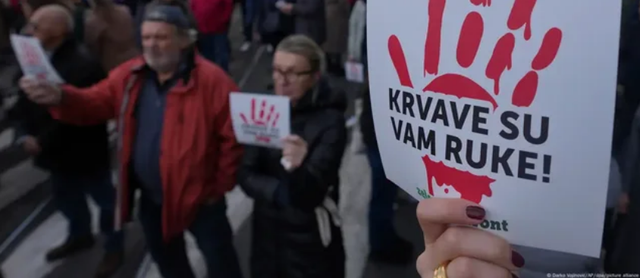
An Amnesty International report shows that Serbian authorities are using spyware to target journalists, politicians and the non-governmental sector. "Digital Prison: Surveillance and Suppression of Civil Society in Serbia" is the name of the aforementioned report, which states that the Serbian regime uses forensic tools to extract data from mobile phones in which the software is installed without any legal basis.
Serbian police and the Security and Information Agency (BIA), among others, use the Cellebrite software, which was donated to Serbia by Norway, to monitor the activities of critics of the Vucic regime.
Analyzing some phones, in which spy software was installed during informative interviews or arrests at police stations, it was found that this software exists in dozens, and perhaps hundreds, of activists' and journalists' phones.
In addition to the Selebrit program, the previously unknown NoviSpy program was also found on the phones.
On the occasion of that report, the Norwegian Ministry of Foreign Affairs emphasized that it does not support the misuse of this program, while the Ministry of Internal Affairs and the BIA of Serbia declared that "they used all these software tools in accordance with the law" and that "this is an irrelevant sensationalist report that deserves no comment".
Serbia has entered a digital prison, because "it has an autocratic government that does not allow the creation of any kind of democratic public", Zoran Gavrilovic from the Bureau of Social Research (BIRODI) evaluates the statements from this report for DW.
"Now we are witnessing that the state has been subjected to a political party and the mechanism for this is the cultivation of the personality cult of Aleksandar Vučić.
The goal is for journalists and the civil sector to stop what they are doing. However, it should be noted here that, in addition to the BIA, the People's Bank of Serbia also does this, which receives data from commercial banks on the financial transactions of journalists and non-governmental organizations and sends them to certain persons in the government, he points out. Gavrilovic.
Journalist Nedim Sejdinovic believes that "it is quite clear how Serbia ended up in a digital prison.
Early on in his administration, Vučić openly disclosed that vast amounts of money and resources were being used to purchase hardware and software that would be used to control political opponents and virtually destroy the opposition.
Over the years, the state has spared no money for the ultimate goal, which is an attempt to completely abolish critical thinking," Sejdinovic told DW.
Amnesty International's report also examines multiple waves of protests in Serbia, during which opponents of the regime were exposed to brutal campaigns, and notes that "defamatory statements were encouraged by high-ranking officials, including the president, members of parliament and the governor of the National Bank of Serbia."
Gavrilovic notes that this is happening even now "during student protests", but that "besides discrediting campaigns, the regime still does not have the courage and will to move to more aggressive forms of suppression of protests that protect democracy and the rule of law in Serbia.
After all, Serbia is in the Balkans, surrounded by NATO and European Union countries, and so isolated from the undemocratic world, it cannot do what undemocratic countries do," Gavrilovic told DW.
The government already has a campaign algorithm when it comes to this kind of protest, notes Nedim Sejdinovic, adding that "besides primitive propaganda, this means that all means are used to introduce division and mistrust into the heart of the rebellion, and the secret services play perhaps even the biggest role here.
But, since the protest is massive and decentralized, I don't think even those software solutions are very useful for the Serbian authorities", says our interlocutor.
A problem for investigative journalists
But the use of spyware greatly threatens the work of journalists and freedom of expression, Sejdinovic emphasizes. He says that “this is especially true for investigative journalists.
Such abuse of power not only endangers the journalists themselves, but also their contacts with people from the government system who give them some information", Sejdinovic draws attention.
Amnesty International's discovery, he says, has shown once again that the Serbian Progressive Party (SNS) sees any opposition activity, as well as any member of the non-governmental sector or critical of the regime, as part of illegal activities.
The conclusion of the report, he added, only confirms that the president of Serbia, Aleksandar Vučić, not only does not tolerate parliamentary democracy, but neither does any critical voice in society.
Autocrats and dictators "see every attempt to fight for democracy as a hybrid war", Zoran Gavrilovic assesses.
Nedim Sejdinovic warns that "the story about the lists of foreign agents has been updated again, which is especially strange in the case of Aleksandar Vučić, who completely opened the doors to foreign influence and foreign capital, and where the Government of Serbia is really the most mercenary big foreign"./ DW

Happening now...









America may withdraw from Europe, but not from SPAK
Nga Gentian Gaba
ideas


Who is the Surrel Rabbit?
Nga Sidi Hasanaj

The two wrong paths of the opposition with the Ombudsman
Nga Patrik Sadikaj
top



Alfa recipes




TRENDING 




services
- POLICE129
- STREET POLICE126
- AMBULANCE112
- FIREFIGHTER128