


FLASH NEWS
British researchers claim to have found the lost city of Atlantis in Spain

2025-01-15 17:10:16 / MISTERE&KURIOZITETE
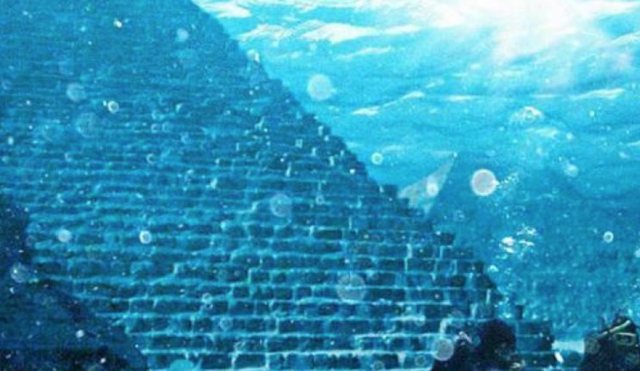
The Greek philosopher Plato wrote that Atlantis was a technologically advanced city that was swallowed by the ocean about 12,000 years ago. While most people think it's just a legend, some people, whether trained archaeologists or amateur treasure hunters, continue to try to find it. According to a British company, the lost city of Atlantis has been found in Spain.
Merlin Burrows, a company of satellite experts, says it has discovered remains that match Plato's descriptions. The company promises that it can "find anything that has been lost, forgotten or hidden with the utmost accuracy."
Bruce Blackburn of Merlin Burrows told Yahoo News in late November: "We have a piece of evidence that we've presented, and a whole bunch of other evidence. And we're very happy that people have a perspective on it." He adds: "We've published the information, we've got some footage, and we recognize that there are going to be people who are going to say, 'What a load of rubbish!'"
Since the Minoan volcanic eruption event and the discovery of Akrotiri on the island in 1964, this site is one of many sites that are presumed to have been the location of Atlantis.
The company used aerial photography and satellite data from Landsat and ancient Greek texts – as well as visiting the site – to identify Atlantis. They say the specific location is in what is now Spain's Doñana National Park, on the country's southwest coast near Seville.
The company says what it has observed matches descriptions in Plato's dialogue, and that what appears to be "concrete" at the archaeological site is over 10,000 years old. The team found what they say are the remains of ancient tower foundations, and the ruins of a large temple that is close to what Plato described. Of course, there are skeptics.
According to the website Live Science, "an archaeologist says the ruins may belong to another ancient culture, and several researchers interviewed were hardly thrilled when they heard the news of another Atlantis discovery. People have made dozens of such claims over the years, finding the legendary city in Antarctica, Bolivia, Turkey, Germany, Malta, the Caribbean and elsewhere."
“Bless their hearts – if they’re right about this, that would be a wonderful thing,” said Ken Feder, a professor of anthropology at Connecticut State University in the US. “But here’s my problem: As an archaeologist, I know I always need to be in the company of my detector. And these people have simply done everything they can to disable my equipment,” he stressed.
But not everyone believes that Plato wrote about a place that actually existed. Plato described ancient society in 360 BC as 9,000 years before he was born, saying that a politician named Critias had heard about the inhabitants of Atlantis through a series of stories passed down through the centuries.
Atlantis served as an example of a society that was corrupted by material wealth, advanced technology, and military might. It should be remembered that Plato wrote that the founders of Atlantis were half-demon, half-human. According to National Geographic, Plato wrote that the founders “created a utopian civilization, and became a great maritime power.”
"Their home was made up of concentric islands separated by wide, interconnected sea currents, with a channel running through the center. The lush islands contained gold, silver, and other precious metals, as well as many rare exotic wildlife."
Plato also wrote that the Gods destroyed Atlantis in a cataclysmic event. In 1627, Francis Bacon published a utopian novel titled The New Atlantis, which described a politically and scientifically advanced society on an unknown oceanic island. In 1882, a Minnesota congressman in the United States named Ignatius Donelin (1831-1901) published the book Atlantis: The Antediluvian World, which claimed that Atlantis had actually existed.
His book touched on a multitude of theories, which in the late 20th century were joined by several New Age beliefs. The place that has had the most supporters is the Greek island of Santorini, a semi-submerged territory created by a massive volcanic eruption in the 2nd century BCE, the tsunami of which may have precipitated the collapse of the Minoan civilization on Crete./ Bota.al





Happening now...
















America may withdraw from Europe, but not from SPAK
Nga Gentian Gaba
ideas


Who is the Surrel Rabbit?
Nga Sidi Hasanaj

The two wrong paths of the opposition with the Ombudsman
Nga Patrik Sadikaj
top



Alfa recipes




TRENDING 




services
- POLICE129
- STREET POLICE126
- AMBULANCE112
- FIREFIGHTER128