


FLASH NEWS
Scientists discover a new dwarf planet in our solar system

2025-05-29 18:49:03 / MISTERE&KURIOZITETE
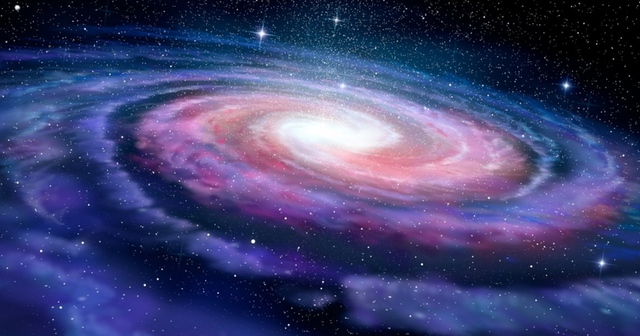
After decades of searching for a 'ninth planet' - a mysterious invisible body that was supposed to gravitationally influence the trajectory of objects beyond Neptune - scientists appear to have discovered something else: a new dwarf planet, positioned at the far edges of our solar system.
The newly discovered object, called 2017 OF201, has a diameter of about 700 kilometers and, according to American astronomers who studied it, meets the conditions to be classified as a dwarf planet, despite being smaller than Pluto.
The discovery was published in a preliminary study last week and is still awaiting scientific review.
" It's an object that reminds us how little we know about the outskirts of our solar system," the study's lead author, Shihao Cheng, from the Institute for Advanced Study in New Jersey, told AFP.
2017 OF201 is located three times farther than Neptune and follows a highly elliptical orbit, which takes it all the way to the Oort cloud – the most distant known region of our solar system.
The object follows a 25,000-year orbit, and can only be observed from Earth for about 100 years, or 0.5% of the time.
" The more we study it, the more we realize there could be hundreds of other bodies hidden in the Kuiper belt, with similar orbits, " Cheng points out.
The discovery highlights the importance of new technology, including the James Webb, Hubble and ALMA telescopes, which researchers plan to use to collect more detailed data.
One of the most intriguing aspects of this discovery is the contribution of a 23-year-old amateur astronomer from California, Sam Dean, who had identified the object's motion in existing databases.
"OF201 is, in my opinion, one of the most exciting discoveries of the decade in planetary astronomy," he told AFP.
For more than 20 years, scientists have observed that icy rocks in the Kuiper belt follow a strange and common trajectory, which has led to the theory that there is a "ninth planet" with a mass ten times that of Earth, but which has not yet been discovered.
But orbits like that of 2017 OF201 could challenge this theory.
According to Cheng, the fact that the object does not follow the same orbital pattern as other Kuiper belt bodies could mean that the forces acting in these areas are more complex than previously thought – and perhaps, do not require a “ninth planet” to explain it.
This opinion is shared by Samantha Lawler, a researcher at the University of Regina in Canada, who believes that such discoveries are increasingly weakening the hypothesis of a large planet hidden in the corner of the solar system.
" We live in an era when telescopes can see almost to the edges of the universe, " Cheng said, "but we still know so little about our own backyard, the far reaches of the solar system."
He and his colleagues hope that the Vera Rubin Observatory, which is expected to start operating this year in Chile, will provide more data to detect other similar objects, and perhaps reveal once and for all whether the "ninth planet" is real or just a gravitational illusion.


Happening now...
















ideas

When cardboard and arrogance become law.
Nga Gjergji Nika

Renaissance is Disaster Capitalism
Nga Klodian Tomorri

Pse tifozeria e Kosovës ishte aq e vdekur dhe mungonin simbolet kuqezi?
Nga Kreshnik Spahiu
top



Alfa recipes



TRENDING 



services
- POLICE129
- STREET POLICE126
- AMBULANCE112
- FIREFIGHTER128