


FLASH NEWS
Renaissance is Disaster Capitalism

2026-04-03 11:53:25 / IDE
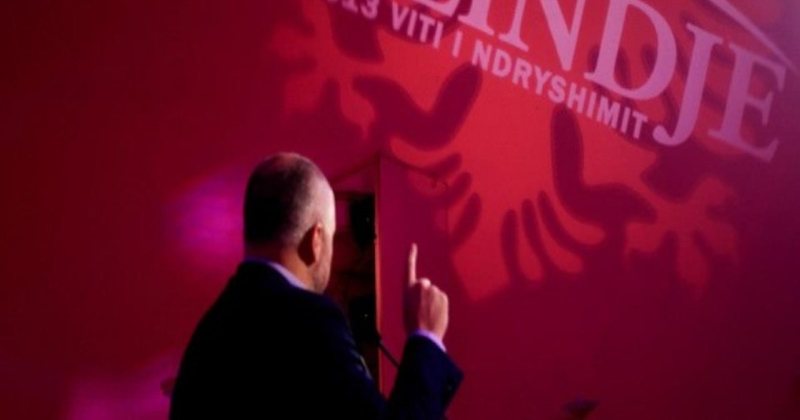
All Albanians now know how the first major corruption scandal of the Renaissance was conceived. As soon as he had the seats in the prime minister's chair, Edi Rama unleashed his propaganda weapons, which the public calls the national media, to fabricate an emergency garbage crisis in Albania.
The country's major television stations were filled with news reports showing piles and mountains of garbage in every corner of Albania. Faced with this dramatic situation, the government's savior had a solution ready for the people. Not one, but three. Incinerators.
The three incinerators did not work a single day and did not burn a single gram of waste. But the garbage crisis disappeared as if by magic. Just as the 300 million euros that Albanians paid for Edi Rama's rusty boilers in Fier and Elbasan and the ghost incinerator in Tirana disappeared in an unknown direction.
But the incinerators were only the first case of the model that invents crises to carry out plunder. In technical language, this phenomenon is known as Disaster Capitalism, explained at length by Canadian author Naomi Clein.
After the incinerators, the model was replicated in the health sector. There the terrain was even more fertile because the dramatic state of Albanian healthcare made it easier to justify the scheme. Edi Rama went from studio to studio with rusty irons in hand to convince Albanians that a radical solution was needed since the health of the population was at great risk.
And the solution was not long in coming. The Savior invented the Check Up, which brought out the men with the burden, the Sterilization of the Rrip of the Rrap and even a concession for the analysis of the urine of the millet. These contracts extorted hundreds of millions of euros from the Albanians and after the money disappeared again this time in unknown directions, the people were given in exchange one Rrap and one Rrap as sacrifices to ease the pain of the hundreds of millions of euros imposed on them by the great Rrap.
This is the most successful model of big government projects. After healthcare, rusty iron bars appeared in Durrës. This time not in hospitals, but in the Port that had been there for thousands of years. The problem was now both aesthetic and economic.
How could the rusty iron bars of the Port stand in the middle of the city, disfiguring the appearance of Albania and damaging the great tourism boom? The solution for this was found in the distant lands of the East.
The port was given a stake to build the 1.5 million square meter Alabbar towers there, while the people were told the tale that they would receive 1 percent more dividends than the Serbs received in the Belgrade Waterfront project.
But there were two small details. That 33 percent was above the dividend, while on the other hand 2 billion euros were needed to build the new port, which it is not known if it will ever be built again. In the end, the Albanians were left with the fabricated disaster of the Port and the turban of Alabbar.
The next episode of Disaster Capitalism is already being prepared. This time in oil. Part of it has slipped off our radar and we need two concessions to catch it. One for branding, and the other for tracking so we can catch traders when they sell the transit oil domestically.
This branding is the return of a love that started as hate for Edi Rama. Although this time the ink will be better than Saliu's, which came off easily. But since the ink is better, the imprint will also be a little deeper on the tariffs.
While the people will win with the investigation because the smugglers will be caught, who buy the oil they transit to Kosovo and sell it here. But the mystery remains how the government knows all this information about the saboteurs' trucks, which depart for Kosovo and are unloaded in Kukës or Lezha. Because to date, neither the customs administration nor the police have reported any case to the prosecutor's office, especially when it comes to a serious crime like smuggling of excise goods.
But this matters little. Only two things are important; the catastrophe and its solution. Or Disaster Capitalism, which is taking the last pennies from Albanians' pockets. /Kapital
Happening now...






ideas

Renaissance is Disaster Capitalism
Nga Klodian Tomorri
Pse tifozeria e Kosovës ishte aq e vdekur dhe mungonin simbolet kuqezi?
Nga Kreshnik Spahiu

top


Alfa recipes
TRENDING 




services
- POLICE129
- STREET POLICE126
- AMBULANCE112
- FIREFIGHTER128