


FLASH NEWS
Iran Today: The Crisis of an Ideological State and the End of Fear

2026-01-15 13:00:25 / IDE
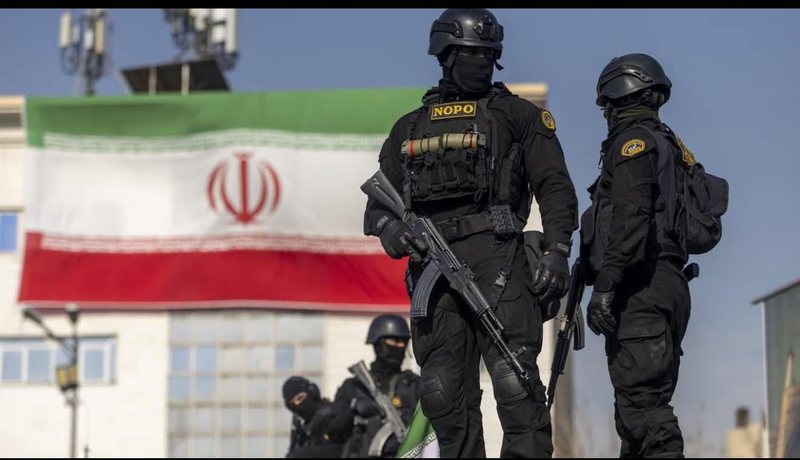
What is happening in Iran today is not simply a wave of cyclical protests, nor a temporary emotional outburst of popular discontent. Iran is experiencing a much deeper crisis: The crisis of legitimacy of an ideological state, built on fear, myth, and perpetual mobilization against an “external enemy.” When this model wears out, it does not collapse with a bang—it erodes from within.
For the Albanian reader, this is a moment that deserves attention not only as an international event, but as a historical reflection. Because many of the mechanisms that are collapsing in Iran today were also known to us, in other forms, in the 20th century.
Who really rules Iran?
In Iran, real power is not in the government or parliament shown on television. It is centered in the figure of Ali Khamenei, the Supreme Leader, a theocratic authority who controls the military, the judiciary, the media, and strategic decision-making. Elections exist, but they are strictly filtered; politics is decorum, not a source of sovereignty.
The second pillar of the regime is the Islamic Revolutionary Guard Corps (IRGC), a structure that is not just an army. The IRGC controls key sectors of the economy – from oil to construction, from ports to public contracts – transforming itself into an ideological oligarchy with weapons. This is why the economic crisis is not simply the result of sanctions; it is also the consequence of a system where the economy has been subordinated to the logic of power, not development.
Why did the anger erupt?
The recent protests began with economic demands: rampant inflation, a devaluation of the currency, mass youth unemployment, the disappearance of the middle class. But they quickly morphed into something else. The slogans changed. Fear began to subside.
The younger generation of Iranians has no emotional connection to the 1979 Islamic Revolution. For them, the founding myth of the regime is a distant memory. When power can no longer guarantee either bread or a minimum of dignity, ideology loses its disciplinary function. This is the critical point of any authoritarian system: the moment when obedience is replaced by contempt.
Women play a key role in this revolt. Not only as victims of moral control, but as active political actors. The protest where women remove their headscarves in public is not just a symbolic act – it is a direct challenge to the ideological foundation of the state. This makes the regime’s reaction even more violent, because it perceives the threat as existential.
Violence as a symptom of weakness
Strong regimes do not need to constantly shoot at their citizens. Mass violence is always a sign of weakness, not strength. Arrests in the thousands, the use of real weapons, internet shutdowns – these do not indicate self-confidence, but institutional panic.
The Iranian regime's real fear is not protest per se, but the possibility of internal ruptures: silent defection from the apparatus, passive disobedience, factional division within the IRGC itself. History shows that ideological regimes do not fall from the squares, but from the corridors.
The geopolitical dimension: Why the world hesitates
Iran is not a peripheral state. It is a strategic node in the Middle East, a key player in a network of militias and alliances stretching from Lebanon to Yemen. A sudden destabilization of Iran would have regional consequences: a power vacuum, the proliferation of weapons, the escalation of conflicts.
For this reason, the West's response is paradoxical: harsh in rhetoric, cautious in action. No one is sure what comes after the current regime. And this uncertainty prolongs the agony of the system, because it allows it to survive through repression.
Revolution or slow dissolution?
Are we facing a new revolution? Probably not, at least not in the classical sense. The protests lack a united leadership, a political program, a clear state alternative. But that doesn't mean the system is sustainable.
What is happening in Iran today is a long-term erosion of authority. A loss of collective fear. An emotional disconnect between society and power. This is a slow, painful process, often invisible in the daily news – but historically irreversible.
Iran is not just news from the Middle East. It is a reminder that states built on absolute ideology and structural fear fail not when the people rebel, but when the government is no longer trusted. Fear can be imposed for years. Legitimacy cannot.
Iran today is an example of a state that still has guns, police, and propaganda, but less and less trust. And history has taught us that, in the end, no regime survives on fear alone.
Happening now...





ideas



top






TRENDING 




services
- POLICE129
- STREET POLICE126
- AMBULANCE112
- FIREFIGHTER128