


FLASH NEWS
The effects of tourism, every euro of tourists generates up to 2.8 euros in the Albanian economy

2026-03-08 15:22:10 / EKONOMI&SOCIALE
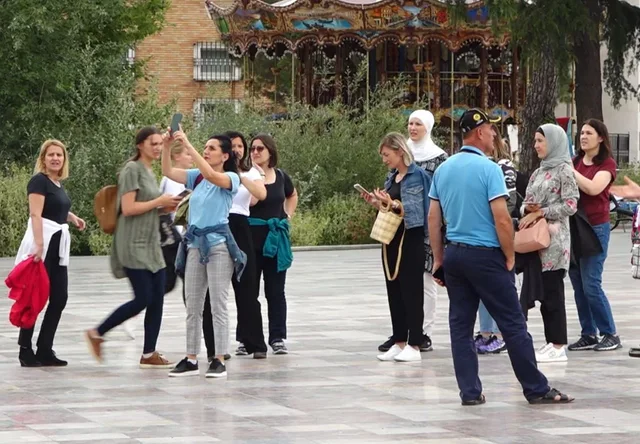
Tourism is not just a sector that brings in direct revenue from hotels, restaurants or transport. It functions as a much broader economic engine, spreading its effects across almost every sector of the Albanian economy. An analysis published by ALTAX shows that tourist spending in Albania multiplies across the economy, creating a ripple effect that affects everything from farmers and builders to trade and services.
According to this analysis, around 5.5 billion euros in direct tourist spending in 2025 is transformed into a total impact of 14.3 to 15.4 billion euros on the economy, thanks to an economic multiplier estimated at 2.6 to 2.8 times. This means that every euro spent by tourists generates an additional 1.6 to 1.8 euros in the economy through the supply chain and domestic consumption.
In total, according to the analysis's estimates, tourism contributes about 26–28% of GDP and supports 274 thousand to 278 thousand direct jobs, not including indirect and induced effects in other sectors.
In the structure of this economic impact, about 35–38% consists of direct effects, which include spending on hotels, restaurants, transport and tourist activities. The rest is distributed to the economy through two other mechanisms: indirect effects, related to the supply chain, and induced effects, related to the spending of employees who benefit from tourism.
Indirect effects represent around 32–35% of the total impact, or around €4.6 to €5.4 billion, including the supply of agricultural products, fish, energy, furniture or other services used by the tourism industry. Meanwhile, 28–32% of the total impact comes from the induced effect, where employees of the tourism sector and related sectors spend their incomes in the economy, from supermarkets and rents to private education or entertainment.
ALTAX analysis also shows that Albania has achieved a relatively high level of multiplier in the region. At 2.6–2.8 times, the country ranks close to tourism economies such as Greece and Croatia, while it is slightly behind Montenegro, where the multiplier reaches up to 3.1 times. In comparison, Bulgaria has a lower multiplier effect, around 2.4–2.6 times.
The growth of this multiplier in Albania has been noticeable in recent years. In 2021, after the pandemic hit, it was estimated at only 2.1–2.2 times, while by 2025 it reached a historic peak, thanks to the increase in the average stay of tourists and the greater integration of domestic production in the tourism sector.
The sectors that benefit most from this chain effect are agriculture, trade and construction. Agriculture and fishing absorb about 18–22% of the indirect and induced effects, creating 35,000 to 45,000 indirect jobs, mainly through demand for food products from hotels and restaurants. Retail trade and services benefit 20–24%, with a significant impact on employment, while the construction and furniture industry receive 12–15% of this impact, thanks to continued investments in hotels and tourist infrastructure.
This effect is also spread geographically across the country. While tourists are mainly concentrated on the coast, the economic benefits reach inland areas such as Fier and Lushnja for agricultural production, or in the transport and logistics sector that connects the regions.
However, the analysis also highlights a significant challenge: a significant portion of the money generated by tourism leaves the economy through imports. Around 35–42% of tourism spending, which translates to 3.1 to 3.9 billion euros, ends up abroad on imported products and equipment.
The majority of this flow is related to food and beverages, which account for around 40–45% of imports, followed by furniture and hotel equipment, fuels, and textile products.
According to ALTAX's analysis, reducing this dependence on imports could significantly increase the economic benefits of tourism. Measures such as direct contracts between farmers and hotels, fiscal incentives for the processing industry, quality certifications, and local furniture production could increase the economic multiplier by up to 3.0–3.2 times.
If these policies were implemented, the Albanian economy could benefit from an additional 2.6 to 4 billion euros per year, even without increasing the number of tourists.
In this context, tourism is not seen only as a service sector, but as a transformative mechanism for the Albanian economy, connecting the coast with rural areas, boosting local production and creating a broad value chain throughout the country. / ekofin.al
Happening now...












ideas



top





TRENDING 



services
- POLICE129
- STREET POLICE126
- AMBULANCE112
- FIREFIGHTER128