


FLASH NEWS
Which European countries are most supported by exports to the US?

2024-11-12 17:18:15 / EKONOMI&SOCIALE
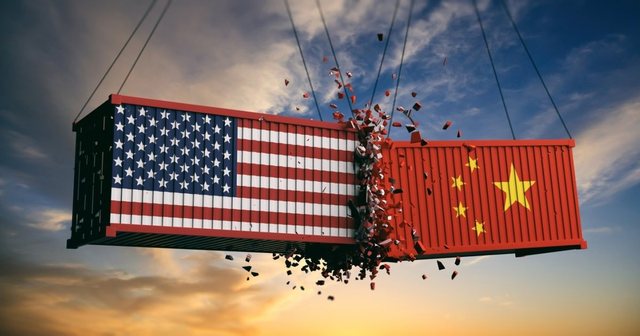
Following his victory, the EU is now considering its options to address a possible 10% tariff on all EU goods exported to the US, a major proposal from Trump's 2024 re-election campaign.
In 2023, Germany led by a wide margin, exporting €157.7 billion of goods to the US according to Eurostat. Italy and Ireland followed, with exports estimated at 67.3 billion and 51.6 billion euros, respectively. Together, these three countries account for 55% of EU exports to the US. France exported 43.9 billion euros, the Netherlands 40.5 billion euros, Belgium 31.3 billion euros and Spain 18.9 billion euros.
Analyzing the US share of non-EU exports and the US share of total merchandise exports to each EU country will highlight potential risks for each country, even those with volumes of total of smaller exports. "Extra-EU" refers to transactions with all countries outside the EU - in other words, trade with the rest of the world, excluding EU member states.
US share of additional EU exports (%)
In 2023, Ireland had the highest share of exports to the US among EU countries, with 45.8% of its non-EU exports going to the US. This means that nearly half of Ireland's exports outside the EU were destined for the US. In addition, seven other EU countries had proportions of 20% or more, ranging from 20% to 26%. These countries included Finland, Austria, Portugal, Italy, Germany, Slovakia and Sweden.
Among the four major EU economies, Spain had the lowest share of US exports in its non-EU exports at 13%, followed by France at 16%. This ratio was less than 10% in seven EU countries. These are Slovenia, Cyprus, Bulgaria, Latvia, Croatia, Romania and Greece.
Ireland is by far the country most dependent on the EU for exports to the US. In 2023, more than a quarter (26.6%) of all Irish merchandise exports were headed to the US, according to Eurostat. This makes Ireland a stark contrast, highlighting the country's significant dependence on the US market.
Finland, Italy and Germany followed, with 11.1%, 10.7% and 9.9% of their total merchandise exports going to the US, respectively. Among the four main EU economies, France's exports to the US accounted for 7.3%, while Spain's was 4.8%.
The USA also had a significant share in the exports of the Nordic countries. Apart from Finland (11.1%), which was ranked second, Sweden (8.9%) and Denmark (8.3%) were ranked fifth and sixth among EU countries in terms of export share in USA.
This ratio was also above 5% in other EU countries, including Austria (7.1%), Portugal (6.8%) and Belgium (6.3%). In total, the US share of exports exceeded 5% in 10 EU countries. Thus, a possible 10% tariff on all EU goods exported to the US would have a significant impact not only on Ireland, Germany and Italy, but also on a number of other countries.
Acknowledging the potential risks, Swedish Prime Minister Ulf Kristersson stated that his country is prepared for various scenarios and developments. "One risk is a trade war between the US and China, together with higher tariffs in general, which could severely affect Swedish export companies," he said, according to Swedish media including Ttela.
Kenneth Kraszewski, of counsel at Borenius Attorneys, noted in his blog that Finnish exporters face a challenging landscape as the US considers imposing tariffs on European goods. The US is Finland's largest trading partner outside the EU, and "Finnish industries especially steel, paper, machinery and technology may face higher barriers to entry in the US market," he wrote.
Among the major European countries outside the EU, the US accounts for a significant share of the UK's merchandise exports. According to the ONS, the US accounted for 15.6% of UK exports in 2023, amounting to around €74bn (£61.5bn).
-

From concealment of income to abuse of office/ Socialist deputy is accused in SPAK
November 12, 5:03 p.m -

Happening now...











America may withdraw from Europe, but not from SPAK
Nga Gentian Gaba
ideas


Who is the Surrel Rabbit?
Nga Sidi Hasanaj

The two wrong paths of the opposition with the Ombudsman
Nga Patrik Sadikaj
top



Alfa recipes



TRENDING 




services
- POLICE129
- STREET POLICE126
- AMBULANCE112
- FIREFIGHTER128