


FLASH NEWS
New Zealand and Australia fall off the map of countries safe from terrorism! From Christchurch to Sydney, the history of religiously motivated crimes

2025-12-14 21:45:00 / BOTA
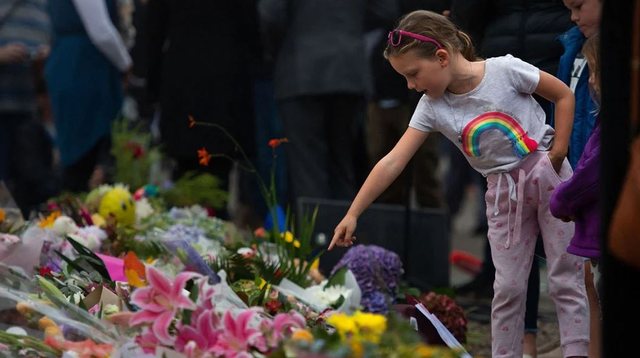
For decades, Australia and New Zealand were considered off the map of international terrorism, treating violence as a sporadic anomaly rather than a structural threat. That image was shattered in Christchurch in 2019.
And six years later, it is being tested again in Australia, with an attack that re-emerges religious targeting as a central motif.
On March 15, 2019, New Zealand suffered its worst terrorist attack in its history. A far-right extremist opened fire on two mosques in Christchurch – the Al Noor Mosque and the Linwood Islamic Centre – during Friday prayers. The death toll was 51 and dozens were injured.
The targets were very specific. Muslim worshippers, unarmed, in places of worship. The motivation was ideological and pure – white supremacy, anti-Muslim hatred, the desire to set an example. The perpetrator acted alone, but he had been radicalized online and sought to turn the violence into a message, broadcasting the attack live. Christchurch was not just a massacre. It was New Zealand’s entry into a new terrorist reality.
Six years later, Australia faces a disturbing reflection of this reality. The attack on Bondi, one of the country's most iconic public spaces, occurred close to the first day of Hanukkah, bringing the Jewish community into the spotlight as a potential target.
The investigation is ongoing, but the symbolism is powerful. As in Christchurch, so in Bondi, the choice is not about an institutional or state target. It is about society at its most exposed. Ordinary people. Public spaces. Religious identity.
The common thread that unites the two incidents is not ideology in the narrow sense. It is the logic of targeted violence. A terrorism that selects specific religious groups, not for strategic gain, but for their symbolism. It does not seek negotiation. It seeks fear. It does not seek power. It seeks coherence.
Australia has not historically been a place of sustained terrorist activity. Incidents have been few but decisive. From the 1978 bombing of the Sydney Hilton Hotel, which left three dead and led to the creation of modern counter-terrorism mechanisms, to the Lindt Café hostage-taking in 2014, the country has treated terrorism as an exception.
However, in recent years, Australian security services have recorded a shift in the threat. Fewer organised networks. More lone perpetrators. And an increase in religious and ideological targeting, in line with international patterns.
What is fundamentally changing is the collapse of the geographical illusion. Oceania is no longer outside the ideological war being waged in the West. From the mosques of Christchurch to the Jewish community in Australia, terrorism is gaining a common denominator – the transfer of international conflicts to local territory, through the targeting of faith.
Six years apart. Two countries that were considered safe havens. And a new reality that no longer allows for complacency. Terrorism in Oceania is not massive. But it is clearly targeted, and that is precisely what makes it more difficult to deal with.
Happening now...












Germany, the "curse" of Rama and Berisha
Nga Bato Kosova
ideas

The opposition must and will be bigger than an individual.
Nga Taulanda Jupi

Violent protests as group therapy
Nga Roland Lami

Those who mocked and attacked Basha
Nga Ermal Peçi
top


Alfa recipes



TRENDING 




services
- POLICE129
- STREET POLICE126
- AMBULANCE112
- FIREFIGHTER128