


FLASH NEWS
Serbia reduces excise duties on petroleum products by 40%

2026-03-20 15:44:34 / BOTA

Serbian President Aleksandar Vučić has announced that the country he leads will reduce excise taxes on petroleum products by 40 percent in order to prevent price increases at the pumps.
He announced that the state aims to guarantee abundant supply and keep prices under control.
"We are giving up almost entirely our revenues in order to reduce the impact on the state budget, as long as we have large reserves," Vučić declared after a meeting with the National Security Council.
According to him, Serbia collects 2 billion euros for the budget from excise duty on oil, which is also the largest revenue from excise duty.
A week ago, Serbia already reduced the excise tax on petroleum products by 20 percent, which, according to Vučić, costs the state about 35 million euros per month.
Before the decision, state taxes accounted for more than half of the price of a liter of gasoline or diesel that consumers paid at the pumps.
Vučić has described the measures as "painful for the state," but that citizens have no reason to worry as Serbia has sufficient reserves.
The conflict in the Middle East has caused major problems in the supply chain of oil and gas products, as well as increased prices.
Kosovo has faced a similar situation. Radio Free Europe has monitored several gas stations week after week and has confirmed that prices have increased by a few cents.
On March 4, the Ministry of Industry, Entrepreneurship and Trade of Kosovo imposed safeguard measures for oil, setting maximum profits allowed for wholesale and retail sales.
According to the decision, the maximum margin allowed for wholesale sales is up to 2 cents per liter, while for retail sales it is up to 12 cents per liter.
The Minister of Industry, Entrepreneurship, Trade and Innovation, Mimoza Kusari-Lila, stated a few days ago that prices are expected to stabilize in the summer months.
As the conflict continues in the Middle East, maritime transport through the Strait of Hormuz has declined drastically.
About 20 percent of the total amount of liquefied natural gas (LPG) used in the world circulates through this strait.
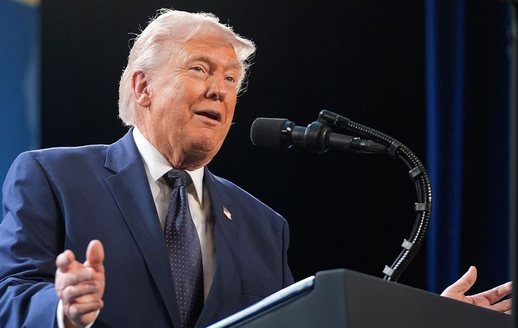
US President Donald Trump has acknowledged that there will be an increase in oil prices, but has assessed that this is a "small price" that must be paid in order to eliminate the nuclear threat of the Islamic Republic of Iran. /REL
Happening now...







ideas



top


TRENDING 



services
- POLICE129
- STREET POLICE126
- AMBULANCE112
- FIREFIGHTER128