


FLASH NEWS
South Korea votes for new president, record citizen turnout! Details from the process

2025-06-03 09:19:39 / BOTA
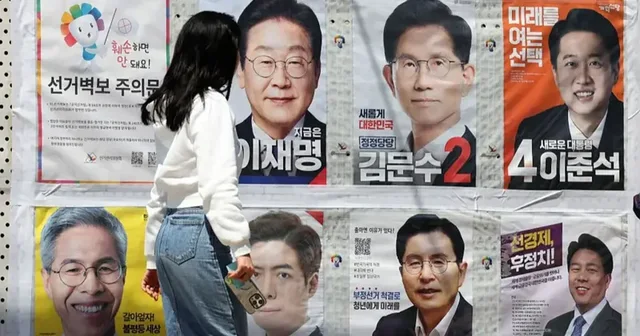
It's election day in South Korea, where voters are choosing the country's next president after months of unprecedented political turmoil.
It all started in December, when former President Yoon Suk Yeol placed the country under martial law. This triggered a trial that led to his removal from office and the holding of snap elections that are currently underway.
Martial law and Yoon's dismissal highlighted deep divisions in South Korean society, with large protests for and against it.
For South Koreans, the vote offers an opportunity to restore stability and move forward.
There are five candidates, but Lee Jae-myung of the Democratic Party holds a strong lead over his rivals. Lee had lost to Yoon in 2022 by a very small margin.
Whoever is elected president will have to deal with issues ranging from US tariffs to tensions with North Korea and a declining birth rate.
Almost 30,000 police officers have been deployed at thousands of polling stations across South Korea.
According to South Korea's National Election Commission (NEC), a record number of 44,391,871 people - including 258,254 overseas voters - have registered for the country's 21st presidential election.
This means 194,179 more qualified voters than in the 2022 presidential election.
Despite South Korea's declining population, the number of eligible voters continues to grow, largely due to an aging population. In this election, the largest age group is voters in their 50s, totaling 8,683,369, or 19.6%.
A record 65.5% of eligible voters had cast their ballots by 2pm local time (6am BST), according to the South Korean Election Commission.
Chronology of the main events leading up to these snap elections:
December 3: Former President Yoon Suk Yeol declares martial law in a late-night televised speech. Heavily armed troops surround the National Assembly to block lawmakers from entering.
December 4: Shortly after 1 a.m. local time, 190 lawmakers, including 18 from Yoon's party, voted to repeal the law. Yoon rescinded his order about three hours later.
December 7: Opposition lawmakers try to impeach Yoon for the first time, but fail after a boycott by members of his conservative People's Power Party.
December 12: Yoon defends his martial law order, saying he did it to protect the country's democracy. He vows to "fight to the end."
December 14: Amid days and nights of protests – from both Yoon's supporters and critics – the National Assembly votes to dismiss Yoon.
December 31: A district court issues an arrest warrant for Yoon.
January 15: About 3,000 police officers manage to arrest Yoon at his heavily fortified residence. This is their second attempt. In the first, hundreds of them faced a six-hour standoff with his security forces.
January 19: The court issues a formal arrest warrant for Yoon, leading a crowd of his supporters to riot, some even forcing their way into the courthouse.
January 26: Prosecutors indict Yoon on charges of leading a
uprising using his offer to declare martial law.
April 4: The Constitutional Court upholds Yoon's impeachment and formally removes him from office as president. The following week, authorities announce that snap elections will be held on June 3.
-
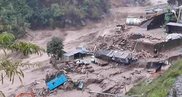
At least 34 people die in India after heavy flooding
June 3, 08:46
Happening now...



America may withdraw from Europe, but not from SPAK
Nga Gentian Gaba
ideas


Who is the Surrel Rabbit?
Nga Sidi Hasanaj

The two wrong paths of the opposition with the Ombudsman
Nga Patrik Sadikaj
top



Alfa recipes




TRENDING 




services
- POLICE129
- STREET POLICE126
- AMBULANCE112
- FIREFIGHTER128