


FLASH NEWS
Germany faces a serious shortage of qualified workers/ DW: It needs immigrants! The workforce could be reduced by 10%…

2024-11-26 23:55:08 / BOTA
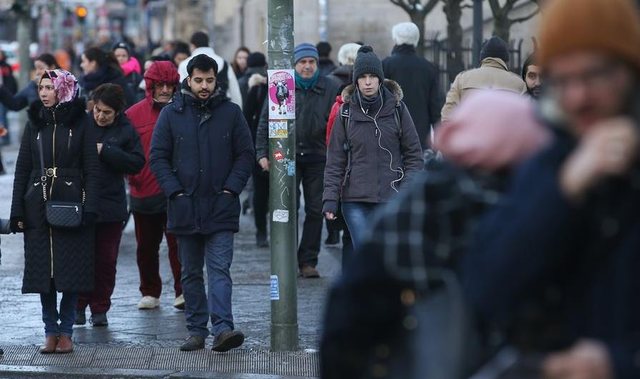
Despite recent reforms in employment migration legislation, Germany continues to face a serious shortage of skilled workers. According to a new study, this should be covered by immigrants.
According to a study commissioned by the Bertelsmann Foundation, Germany's labor force could shrink by 10% by 2040 if there is no "significant" migration.
The study concludes that, without an influx of around 288,000 skilled foreign workers per year, the German workforce could drop from 46.4 million today to 41.9 million in 2040. In 2060, this workforce could drop to 35.1 million himself.
"The exit of the "baby boomers" (people born from 1950 to 1964) from the labor market presents great challenges", said Susanne Schultz, migration expert at Bertelsmann.
Schultz said that Germany's internal potential must be developed and increased, but also that "this demographic change requires immigration".
A second projection model, based on more pessimistic data, estimated that up to 368,000 migrant workers per year could be needed by 2040, a figure that would decrease to 270,000 per year thereafter, by 2060.
Are the reforms enough to boost employment in Germany?
Since migration for employment reasons is currently below the required levels, Schultz stated that it is necessary to remove barriers and improve conditions for immigrants.
Germany's employment migration laws were reformed in 2023 to make it easier and more attractive for skilled foreign workers to find employment in Germany. Interior Minister Nancy Faeser promised at the time "the most modern migration law in the world".
However, in the publication of its new study, the Bertelsmann Foundation stated that those foreign workers would not come "without a more welcoming culture on the part of local authorities and companies" and without "the prospect of a long-term stay".
I want equality, but I won't beg for it
An example cited by the German news agency dpa gives food for thought.
The paper cited a Syrian refugee who fled his country's civil war in 2016 at the age of 21 before graduating from universities in western Germany with bachelor's and master's degrees.
Now he is a computer specialist, trained in Germany and went to Switzerland.
"I did my best here to be considered an equal, but I felt discrimination and rejection," he said, recounting denigration in social circles and part-time work while waiting for an acceptable job offer that never came.
"I want to be treated as an equal. "But I won't beg for it."
For Bertelsmann's Schultz, the case “is unfortunately not an anomaly. Germany cannot afford such an attitude and must be more attractive."
How will the decline in the labor force affect the German regions?
According to the analysis, the effect of the reduced workforce and the need for more migration to fill the gaps would be felt differently in each region of Germany.
At a time when the average 10% reduction in the workforce would probably affect the country's most populous state, North Rhine-Westphalia, demographically weaker states such as Thuringia and Saxony-Anhalt, in the former East Germany, and the small state of Saarland , on the French border, would be affected even more.
The traditionally wealthy southern regions, such as Bavaria and Baden-Württemberg, would not be unscathed either.
Big cities like Hamburg and Berlin, which already benefit from high levels of migration, will be less affected, according to the study./DW


Happening now...















America may withdraw from Europe, but not from SPAK
Nga Gentian Gaba
ideas


Who is the Surrel Rabbit?
Nga Sidi Hasanaj

The two wrong paths of the opposition with the Ombudsman
Nga Patrik Sadikaj
top



Alfa recipes




TRENDING 




services
- POLICE129
- STREET POLICE126
- AMBULANCE112
- FIREFIGHTER128