


FLASH NEWS
Britain responds to Russia, Starmer makes nearly 15 billion pounds investment in nuclear weapons

2025-06-02 07:42:13 / BOTA
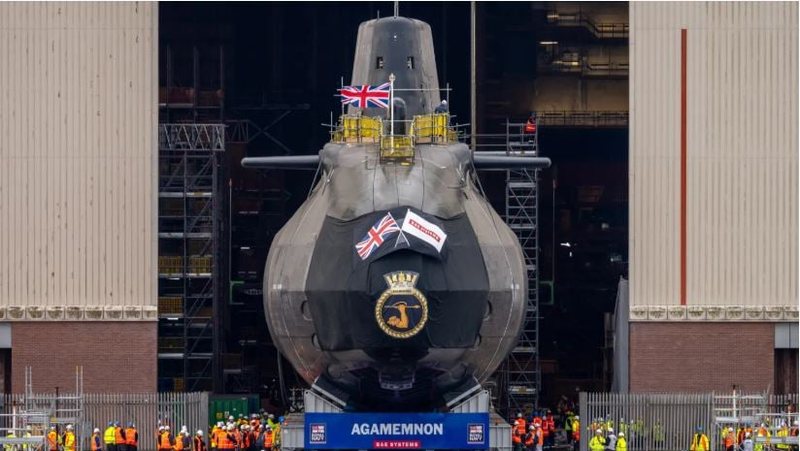
Britain will build a series of nuclear-powered attack submarines.
This will be announced today by Sir Keir Starmer as he puts the armed forces on war alert. They will replace the UK's seven Astute-class submarines, which are equipped with conventional weapons, and will enter service from the late 2030s, joining the four Trident submarines that maintain the country's nuclear deterrent at sea.
Starmer will also pledge a £15 billion investment in the UK's sovereign nuclear weapons programme.
The prime minister's announcement is part of the government's long-awaited strategic defence review, due to be published today. It will set out the UK's ten-year defence plan and is expected to be fully endorsed by the government.
The review is expected to recommend that the armed forces move to war readiness in an era of new threats, including the “immediate and urgent” danger posed by Russia.
During a visit to a shipyard on Monday, Starmer will announce that the new fleet of attack submarines is part of a shift in Britain’s deterrence and defence strategy.
John Healey, the defence secretary, said Britain must be prepared for a military attack by Russia and that the review would send a “message to Moscow” about Britain’s readiness to fight.
However, he backed away from a commitment to spend 3 percent of GDP on defence by 2034, three days after telling The Times in an interview that he had “no doubt” Britain would meet that target in the next parliament.
He had said there would be a “safe decade of increased defence spending”, adding: “It allows us to plan for the long term. It allows us to deal with the pressures.”
The ten-year defence plan is based on a 3 per cent commitment and is unsustainable without it. Britain currently spends 2.3 per cent of GDP, which is set to rise to 2.5 per cent by April 2027.
Although asked during the interview with The Times, Healey did not mention that the 3 per cent target had previously been seen as an “ambition”. However, he returned to that description in a series of interviews on Sunday with outlets including Times Radio.
A Whitehall source said there was “no policy change” on 3 per cent and that Healey had “expressed an opinion” in his interview with the Times. The source said Healey was “confident” the 3 per cent target would be met in the next parliament but that he was unable to change the fiscal rules.
Healey also admitted he could not increase the size of the armed forces until the next parliament. Asked when the army would reach the target of 73,000 troops, he said: “We have closed the gap but we still have more people leaving than joining.
“The first task is to reverse this trend and then I want to start increasing the number in the next parliament.”
Healey said Russia was attacking Britain every day in cyberspace, but when asked on the BBC’s Sunday With Laura Kuenssberg show whether he expected Moscow to launch some form of military attack on Britain, he said: “We have to be prepared, NATO has to be prepared. We see Putin in Ukraine trying to change international borders by force… it’s part of the increased Russian aggression.”
He added that this was why NATO and the UK were “strengthening our ability to deter as well as to defend ourselves in the future.”
The new attack submarines will be part of the Aukus security partnership between Britain, the United States and Australia. Signed in 2021, the agreement allows the three countries to share the technology and equipment needed to build the submarines, as well as intelligence gathered through reconnaissance missions.
Happening now...








America may withdraw from Europe, but not from SPAK
Nga Gentian Gaba
ideas


Who is the Surrel Rabbit?
Nga Sidi Hasanaj

The two wrong paths of the opposition with the Ombudsman
Nga Patrik Sadikaj
top



Alfa recipes




TRENDING 




services
- POLICE129
- STREET POLICE126
- AMBULANCE112
- FIREFIGHTER128