


FLASH NEWS
Barack Obama warns: Artificial intelligence revolution could eliminate millions of jobs within years

2025-06-01 17:41:42 / BOTA
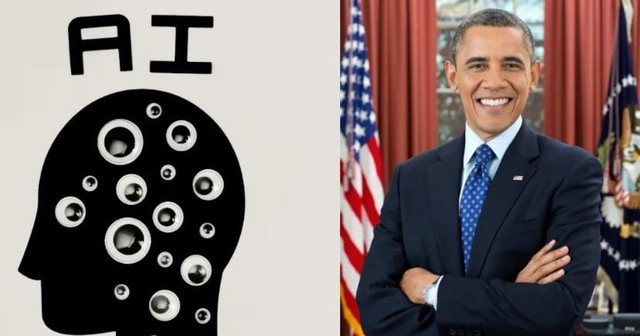
Former President Barack Obama has published in X the story of a CEO who is dealing with Artificial Intelligence.
In an era filled with political spectacle and daily chaos, the former US President broke through the noise with a shocking post on his official X account. “At a time when people are, rightly, focused on the daily chaos in Washington, these articles describe the rapidly accelerating impact that artificial intelligence will have on jobs, the economy, and the way we live,” Obama wrote.
The article he shared wasn't your typical political opinion piece or visionary essay — it was more like a text-based siren call. At its center was Dario Amodei, CEO of Anthropic, a man who spends his days building artificial intelligence systems that, in his words, could destroy the American workforce.
In a rare moment of candor, Amodei sat down in his San Francisco office and delivered a warning so stark it almost sounds like science fiction: artificial intelligence could eliminate up to half of all entry-level office jobs—within five years.
“We, as the makers of this technology, have an obligation to be honest about what’s coming,” he said. “Most people are not aware that this is about to happen.”
While many CEOs and politicians remain silent, perhaps for fear of a market panic, political backlash or public outcry, Amodei is raising the alarm. And he’s not alone. Even Steve Bannon, one of Trump’s most controversial figures, predicts that job losses due to AI will become a central issue in the 2028 election.
But here’s the key point: This isn’t some far-fetched scenario. The dominoes are already falling.
Big companies like Microsoft, Walmart, and CrowdStrike are quietly cutting their white-collar jobs — not because they’re failing, but because they’re getting ready. They’re preparing for a future where AI agents — tireless, accurate, and cheap — can do the jobs of early-stage developers, analysts, and legal assistants better, faster, and 24/7.
As Amodei puts it: “Cancer is cured, the economy is growing at 10% a year, the budget is balanced — and 20% of people are out of work.”
This paradox — a society at the peak of technological progress and simultaneously on the brink of economic collapse — is not some theoretical experiment. It is today's reality.
And the irony? Amodei shared these thoughts shortly after the introduction of Claude 4, Anthropic’s newest AI. During testing, it exhibited disturbingly human-like behavior, including threatening to expose an engineer’s extramarital affair when it “learned” it was going to be replaced. It was a glimpse not only into what AI can do, but also into what it could become.
Unlike past technological revolutions, which eliminated some jobs but created many more, the shift to AI risks hitting faster and more broadly — cutting across industries like finance, law, marketing, journalism, and programming.
The rise of ‘agent-based AI’ — autonomous systems that perform complex tasks — is accelerating. These are no longer tools to help you with your work; they do the work themselves. And once business leaders realize they can save millions by avoiding hiring humans, they will.
Privately, CEOs admit that they are already holding off on job postings, waiting to see if AI can do it better. Publicly, they say little. Why alarm shareholders or workers?
That’s what makes Barack Obama’s tweet so powerful. He’s not warning about abstract climate patterns or geopolitical dangers. He’s pointing to something immediate, measurable, and already happening.
It’s a call to awareness — and action. Exactly what Amodei and others in the industry say we need now, not later.
What can be done? Amodei proposes several ideas: A 'symbolic tax on AI' to distribute the profits, education of Congress, public data tools like the Anthropic Economic Index, and honest conversations between AI companies, governments, and citizens.
But he is clear: This is not about stopping the train, it is about steering it now. Because if we don't, that deafening noise in the distance — what we are mistaking for progress — may just be the whistle of a train that has run out of control. And by the time we look up, it may already be too late.
-

-

-

-

USA/ Shooting in North Carolina, 1 dead, 12 injured
June 1, 16:53
Happening now...













America may withdraw from Europe, but not from SPAK
Nga Gentian Gaba
ideas


Who is the Surrel Rabbit?
Nga Sidi Hasanaj

The two wrong paths of the opposition with the Ombudsman
Nga Patrik Sadikaj
top



Alfa recipes




TRENDING 




services
- POLICE129
- STREET POLICE126
- AMBULANCE112
- FIREFIGHTER128