


FLASH NEWS
Martin Leka: How Sali Berisha used Azem Hajdari's funeral to take over RTSH! That day they took me hostage!

2025-03-15 11:28:33 / POLITIKË
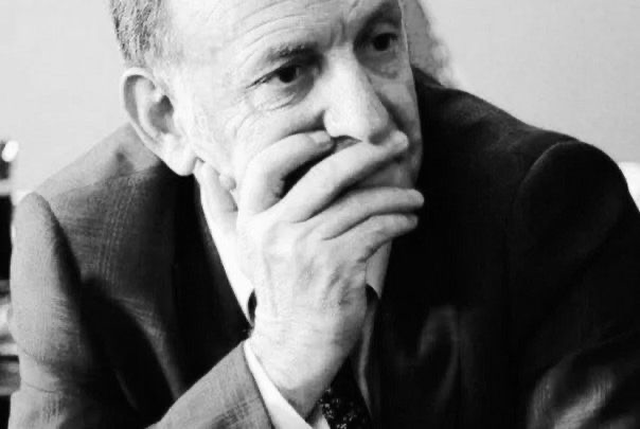
September 1998, how did Sali Berisha use Azem Hajdari's funeral to attack, among other things, the Albanian Public Radio and Television?
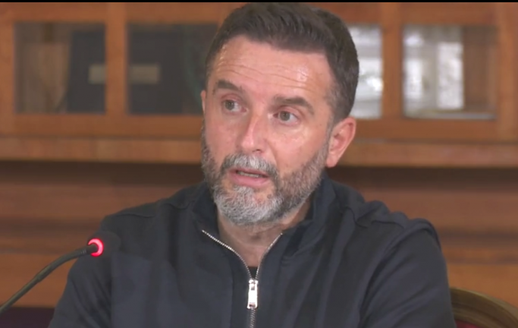
The events of September 14, 1998 remain one of the darkest moments in the history of Albanian media and politics. Martin Leka, former director of Radio Tirana, provides detailed testimony on the events surrounding Azem Hajdari's funeral and the attack on Albanian Public Radio and Television (RTSH), shedding light on the role of Sali Berisha in those tense days.
Martin Leka remembers the moment he heard the news of Azem Hajdari's murder. It was a dark, rainy night, and as the city and state awaited the start of the new school year, political tension reached its peak. Berisha immediately accused Fatos Nano of being the perpetrator of the murder, igniting the bloodshed among the Democrats, who turned the funeral into a violent protest.
"The next day, on September 14, the Prime Minister's Office and RTSH were attacked," Leka recounts. "In those years, weapons were still in people's hands from the 1997 riots. What happened could be called an attempted coup, because power is not taken by violence, but by vote."
RTSH under attack: 'They took me hostage'
As director of Radio Tirana, Leka was at the center of events. He remembers how the mob attacked the RTSH building, destroying and usurping the state television premises. In the chaos, he ended up isolated in the Kosovo Newsroom, under the supervision of an armed person.
"A man I didn't know was guarding me with a gun. He was either drunk or had something else. Then, they told me that they had to take me to Azem Hajdari, meaning dead!" - he says, also mentioning the role of Antoneta Malja in that tense situation.
Leka managed to communicate with Sami Dushku, a well-known figure in the special forces, who helped him escape from RTSH alive. He describes how, at a critical moment, Sali Berisha’s bodyguard Izet Haxhia approached him and accused him of being a journalist who was “insulting” Berisha.
"No," I said, "I don't curse, I write about Sali Berisha!"
At that moment, a phone call from Sami Dushku to Izet Haxhië saved him from a bad fate.
"If you touch a hair, I'll blow you up!" These were Sami Dushku's words that prevented a potential act of violence.
RTSH was taken hostage by Democratic Party protesters, so much so that when they stormed in, the situation inside was chaotic.
“My technicians were brought pilaf and soup, distributed by Azem's sister in his memory,” says Leka, recounting how the news broadcast was kept alive by a few remaining journalists, including Vera Isaku and Etleva Gjonçaj.
In addition, he also mentions the efforts of Aleksandër Frangaj and Blendi Fevziu to restore normality in the media.
Sali Berisha's Responsibility
According to Leka, Berisha could and should have stopped the crowd, but he didn't.
"He instigated the revolt to seize power. But power is obtained through votes and people, not through violence," he says.
In retrospect, Martin Leka notes that Berisha's politics always had a "shade of violence," and that the events of that time show how the media and journalists were put at risk by a violent political climate. Martin Leka also speaks about other causes of the journalistic climate:
"These are events that cannot even be imagined today. The day of September 14, 1998 was as long as a lifetime," he said.
This article is based on Martin Leka's testimony given on the Esence Show with Eljan Tanin, where his goal is to bring a clear picture of a key moment in Albanian history and the beginning of violent democracy in Albania./ ReportTV




Happening now...


ideas
When cardboard and arrogance become law.
Nga Gjergji Nika
Renaissance is Disaster Capitalism
Nga Klodian Tomorri
Pse tifozeria e Kosovës ishte aq e vdekur dhe mungonin simbolet kuqezi?
Nga Kreshnik Spahiu
top

Alfa recipes
TRENDING 




services
- POLICE129
- STREET POLICE126
- AMBULANCE112
- FIREFIGHTER128