


FLASH NEWS
Iran estimates war damages at $270 billion, seeks compensation from regional countries

2026-04-15 18:46:03 / BOTA
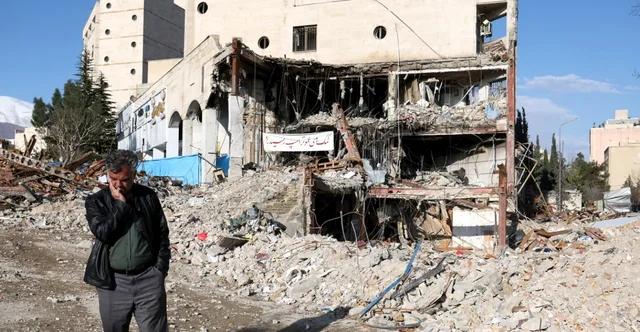
Iran is seeking compensation for damages caused by the attacks by the United States and Israel, estimating total direct and indirect losses at around $270 billion, as diplomatic efforts by countries in the region to end the conflicts continue.
Tehran says it has no intention of backing out of negotiations with Washington, despite the extensive economic and logistical blow it has suffered from US and Israeli military operations since February 28.
Iran's ambassador to the United Nations said on Tuesday that five regional countries should pay compensation, claiming their territories were used to carry out attacks against the country.
Iran is also considering imposing a transit fee in the Strait of Hormuz, through a special protocol that would impose a tax on ships using the strategic waterway.
Government spokeswoman Fatemeh Mohajerani told Russia's RIA Novosti news agency that damage from the war amounted to about $270 billion, without giving details on how the losses would be distributed.
She said the issue of compensation was discussed in last week's talks between Tehran and Washington in Pakistan and is expected to be raised in upcoming negotiations with the US and international mediators.
Iranian authorities are still assessing the extent of damage to critical infrastructure, as oil and gas facilities, petrochemical plants, steel mills and aluminum factories have been repeatedly targeted, along with military installations. It is estimated that full restoration will take years.
Damage was also recorded to bridges, ports, railway networks, universities and research centres, as well as to power plants and water desalination plants. A large number of hospitals, schools and homes were severely damaged or completely destroyed.
The government spokesman acknowledged that the state's financial capabilities are limited, noting that "existing economic conditions" do not allow for compensation for citizens whose homes were damaged by US and Israeli attacks.
The secretary general of the Iranian Airlines Association, Maqsood Ashadi Shamani, said 60 civilian aircraft had been grounded, 20 of which were completely destroyed. According to him, Iran has about 160 passenger planes in operation, most of which are old, whose maintenance has become difficult due to a shortage of spare parts due to US sanctions. Airlines suffered significant revenue losses during the Nowruz period, the Persian New Year in late March, with total losses exceeding 300 trillion rials, or about $190 million, during the 40-day war.
Major international airports in the country, including those in Tehran, Tabriz, Urmia and Khorramabad, were also severely damaged, as attacks hit runways, control towers and aircraft hangars.
Despite the scale of the destruction and the impact of the US-imposed naval blockade of Iranian ports, Tehran has said it has no intention of making any major concessions in talks with Washington, including on the issue of nuclear enrichment.
The spokesman for the Iranian parliament's National Security and Foreign Policy Committee, Ebrahim Rezaei, said in a post that the recently announced ceasefire should not be extended, arguing that it would allow the US and Israel to replenish their weapons stockpiles and improve their military position.
"They must either recognize Iran's rights, including our control over the Strait of Hormuz, or return to war," he said.
According to SIPRI, Iran allocated about $8 billion for military spending in 2024, while officials have pledged to triple the budget after exchanging missile strikes with Israel in October of the same year. At the same time, the country faces budgetary pressures due to internal mismanagement, corruption and years of US sanctions.
The near-complete shutdown of internet access for more than 90 million citizens has further burdened the economy, as the situation remains in place for the seventh week.
The government has attributed responsibility for the measure to the Supreme National Security Council. The head of the Iranian Chamber of Commerce committee, Afshin Kolahi, said the shutdown is causing daily losses of up to $80 million.
At the same time, a plan is being promoted to create a multi-tiered system of internet access. According to the Ministry of Information and Communications, selected businesses will have access to the global internet, while the rest of the population will be limited to a local network.
Telecommunications companies offer an “Internet Pro” service to specific users deemed eligible by the authorities, offering less filtered access at a higher cost. At the same time, a parallel market is developing for the sale of VPN services and other technical tools that allow connection to the external internet.
The situation in the digital environment has caused strong reactions from citizens, with the main demand being freedom of access to the internet, while the ongoing financial burden is intensifying the pressure on the Iranian government.
Happening now...















Denouncing Berishism is a prerequisite for denouncing the government
Nga Blendi Kajsiu
ideas

The Hungarian lecture and 4 messages for the political establishment in Albania
Nga Kreshnik Spahiu

Viktor Orban dictator?
Nga Indrit Vokshi

top



Alfa recipes








services
- POLICE129
- STREET POLICE126
- AMBULANCE112
- FIREFIGHTER128