


FLASH NEWS
New border checks at EU airports cause queues, delays and flight cancellations

2026-04-13 18:41:53 / AKTUALITET
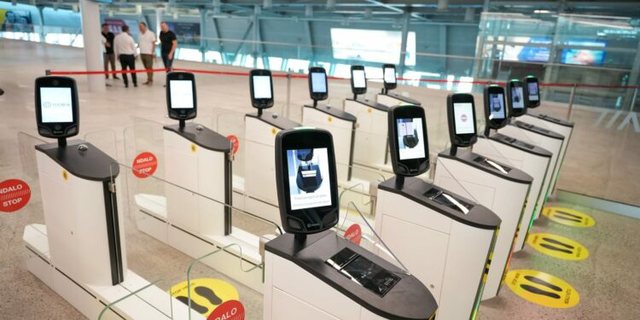
Long queues, major delays and flight cancellations are facing thousands of non-EU travellers at many European airports due to the European Union's new border control system (EES), which requires biometric registration when entering and exiting the Schengen area.
The new system requires the collection of biometric data, such as fingerprints and photographs, for travelers from countries outside the Schengen area, including the United Kingdom.
Long queues and delays were reported on Saturday and Sunday at major European airports, including Geneva, Lisbon and Malta, while problems were also reported in hubs such as Brussels and the Netherlands.
According to the Daily Mail, disruptions continued today (April 13), with passengers at Brussels Airport and Amsterdam's Schiphol reporting delays of up to two hours on social media at passport control.
A passenger in Amsterdam described images of “elderly people and parents with small children” waiting in line for automated checkpoints, noting that “almost none” of the available ones were working. The airport’s website confirmed the “long delays.”
In Milan, passengers reported people fainting after waiting up to three hours at passport control on Sunday evening.
EasyJet reportedly delayed the flight by 52 minutes to give passengers more time to get through passport control. However, as the crew approached the maximum number of hours allowed for safety reasons, the flight took off with many seats empty.
The situation has led many travelers to seek alternative ways to get home, with some discovering they have missed their flights while still waiting in line. A
An easyJet spokesperson told the Daily Mail:
"We are aware that some passengers departing from Milan Linate have experienced longer than usual waiting times at passport control and we have advised customers to arrive at the airport early. We continue to call on border authorities to make full use of the flexibility allowed under the EES to avoid these unacceptable delays for our customers. While this is a matter outside our control, we apologise for the inconvenience."
Ryanair chief executive Michael O'Leary has described the implementation of the new system as "chaos" and "disorder", claiming the European Union is "punishing" British travellers after Brexit by imposing long queues at passport control.
He said that "significant disruptions" have been recorded in checks since the system's first implementation in October 2025, adding that its full operation is expected in April, but delays and increased waiting times have already occurred.
How the new system works The EU's new Entry/Exit System (EES) requires travellers from third countries, such as the UK, to register biometric data – a facial photograph and fingerprints – when entering the Schengen area, which consists of 29 European countries, mainly EU member states.
The automated system was initially implemented in October 2025, with airports and ports having until April 10 to fully implement it. The EES replaces the traditional system of stamping passports by a border guard.
At the first check-in, a facial photograph is taken and a passport scan is taken, while adults and children over 12 years of age also have their fingerprints scanned. British travelers do not need to make any specific preparations, but are advised to arrive at airports early due to possible delays at checkpoints.
Happening now...







Denouncing Berishism is a prerequisite for denouncing the government
Nga Blendi Kajsiu
ideas

The Hungarian lecture and 4 messages for the political establishment in Albania
Nga Kreshnik Spahiu

Viktor Orban dictator?
Nga Indrit Vokshi

top


Alfa recipes







services
- POLICE129
- STREET POLICE126
- AMBULANCE112
- FIREFIGHTER128