


FLASH NEWS
Britain warns Kosovo: Political blockade risks international support

2026-06-09 18:10:49 / KOSOVA
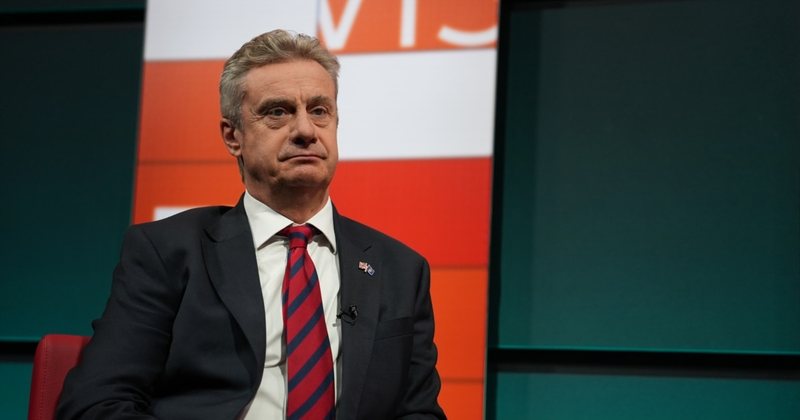
Kosovo risks losing international credibility and the support of allies if the political blockade continues, warned the British ambassador to Pristina, Jonathan Hargreaves, emphasizing that the country's constitutional system is built for cooperation, not political dominance.
In a statement given to Radio Free Europe, following the early parliamentary elections of June 7, he congratulated citizens for participating in the elections and praised the Central Election Commission's commitment to organizing them in a short period of time.
However, the British diplomat noted that the political crisis is seriously jeopardizing Kosovo's future.
"Kosovo should be proud of its democratic record since independence. The United Kingdom is proud to have stood by Kosovo every step of the way. But the noticeably low turnout in Sunday's elections shows that citizens' patience with politicians is running out," Hargreaves told Radio Free Europe.
The June 7 elections were held after the Kosovo Assembly failed to elect a president, in accordance with a ruling by the Constitutional Court.
This was the third electoral process in less than a year and a half, following the regular elections of February 9, 2025, and another early process on December 28.
According to preliminary CEC results, the Vetëvendosje Movement of the acting Prime Minister, Albin Kurti, came first with around 42 percent of the vote, followed by the Democratic Party of Kosovo with around 21 percent, the Democratic League of Kosovo with around 17 percent, the Alliance for the Future of Kosovo with around 7 percent and the Serbian List with around 6 percent.
Hargreaves said that the year and a half of institutional crises and blockades are seriously damaging Kosovo's position in the international arena.
"These impasses risk undermining Kosovo's credibility and progress internationally. They allow Kosovo's opponents to portray it as weak and unstable, while making it difficult for allies to protect and support it," the British ambassador said.
He added that Kosovo urgently needs political stability and functional institutions, emphasizing that parties must reach agreements on the formation of the Assembly, the Government, and the election of the president, so that the country can make decisions and produce results.
“The Assembly has only been fully functional for about 10 weeks out of the last 75. Much of this time has been devoted to procedures, not to impacting the people of Kosovo,” said Hargreaves, adding that “it is vital to ensure the rapid certification of results, respect for the will of the voters, and cross-party agreement on the formation of institutions.”
According to him, Kosovo has a strong constitutional framework that encourages cooperation instead of domination, but its functioning depends on the willingness of political leaders to compromise and cooperate.
After the results were announced, Kurti left open the possibility of negotiations with other political representatives, but without clear signals for a quick agreement.
PDK leader Bedri Hamza said that he does not exclude any party from cooperation in the formation of new institutions, while LDK leader Lumir Abdixhiku set the inclusion of Vjosa Osmani in the post of president as a condition for talks.
A day earlier, the embassies of other Quint countries, Germany and Italy, also called for the rapid formation of institutions.
"We need a strong partner with whom we can work. Progress on the path towards EU integration depends on all political actors putting aside their differences and working together in the best interest of the country," the German Embassy told REL.
The Italian Embassy said it encourages all political leaders to engage in constructive dialogue and work together for the good of the country and its future.
The US and French did not respond to REL's requests for comment. /REL
Happening now...





ideas
Protest against an immoral elite
Nga Sokol Neçaj

Protests do not produce leaders
Nga Ardi Stefa
Zombies versus Gen Z!
Nga Arbër Hitaj
top


TRENDING 



services
- POLICE129
- STREET POLICE126
- AMBULANCE112
- FIREFIGHTER128