


FLASH NEWS
Protests do not produce leaders

2026-06-09 15:34:33 / IDE
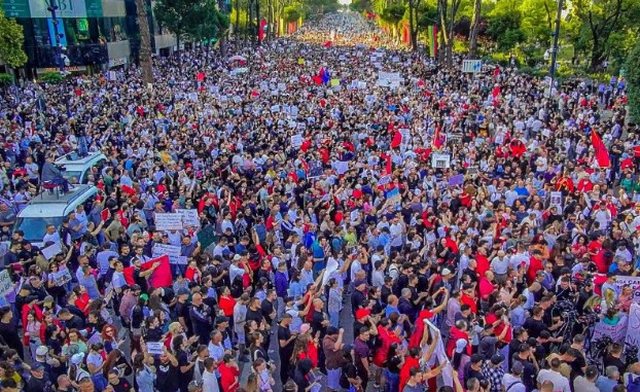
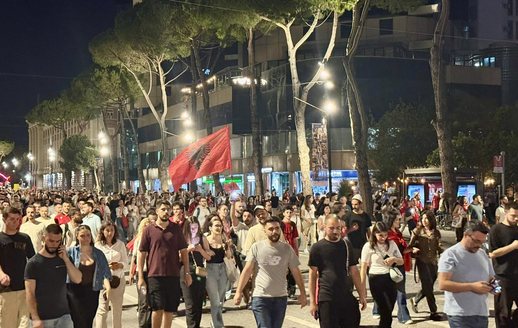
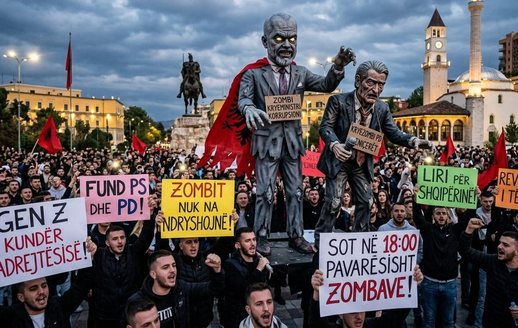
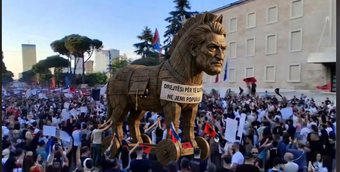
The ongoing protests in Albania have achieved something that until recently seemed difficult: they have broken the apathy. They have brought to the fore citizens who identify neither with the government nor with the traditional opposition. They have brought energy, anger, and a clear demand for change. This in itself is an important development for a society that has been held hostage for years by a tired and sterile clash between the same political actors.
But here comes a misunderstanding.
Collective enthusiasm creates the illusion that the next leader will automatically emerge from the crowd.
But this usually happens very rarely.
Protests can generate energy, revolt, awareness, and public pressure. They can topple governments, force governments to step down, and change political agendas. But protests, in and of themselves, do not produce leaders. Protests only highlight them. Or reveal their absence.
A crowd is not leadership. Nor is cheering a vision. Anger is not a political program.
Even the most beautiful, massive, and enthusiastic protest has a limit; it knows who it is rising up against, but it does not always know what needs to be built next. It is at this point that the need for leadership arises.
Protests should highlight individuals who enjoy public trust, who know how to clearly articulate problems and solutions, who have clear ideas for the future, and who are able to take responsibility. Not who speaks the loudest, but who thinks the clearest. Not who gets the most applause, but who offers the most alternatives.
If the protest fails to identify figures with integrity, articulation, vision, and organizational skills, it risks remaining simply an emotional outburst that will fade over time.
If protests are to have a lasting impact, they must move from the stage of revolt to the stage of representation. They must be able to identify individuals who not only protest, but who can lead. People who know how to explain not only what is wrong, but also how it can be fixed. People who have the courage to take responsibility and not just criticize.
This is much more difficult than organizing a protest.
A leader is not born by being on the front lines of a protest. He is proven by the ability to build a vision, to unite diverse people and to transform the revolt into a political project. The protest is just the moment when he becomes visible.
Leaders are needed because protesters need to understand that gathering a crowd is one thing. Building trust is another. Creating slogans is easy. Building a program is much harder. Criticizing the government is necessary. Showing that you can govern better is the real challenge.
Many movements have failed precisely because they confused mass with leadership. They believed that the crowd would solve the problem of representation on its own. But when the protest is over, people look for someone to speak on their behalf, to negotiate, organize, and build an alternative.
Therefore, the challenge of any serious protest is to identify and highlight the figures who can become the credible leaders of tomorrow.
If protests remain just protests, they will be consumed by time. If they remain just revolts, they will lose their transformative power. If they remain just a "no" to the current government, without building a "yes" for the future, then they will create the next disappointment.
Protests are the beginning of change, not the end of it. Real change begins when ideas emerge from the energy of the crowd, from ideas emerge organization, and from organization emerge leaders who take on the burden of leadership.
That's why I say that protests don't produce leaders. They only create the opportunity for leaders to be discovered. And if that opportunity is lost, then the protest dies down, the crowd disperses, the banners are taken down, and everything goes back to the way it was before.
Happening now...




ideas

Protests do not produce leaders
Nga Ardi Stefa
Zombies versus Gen Z!
Nga Arbër Hitaj

Shqipëria ka nevojë për një Republikë të reformuar!
Nga Taulanta Jupi*
top




TRENDING 



services
- POLICE129
- STREET POLICE126
- AMBULANCE112
- FIREFIGHTER128