


FLASH NEWS
Protest against an immoral elite

2026-06-09 17:21:08 / IDE
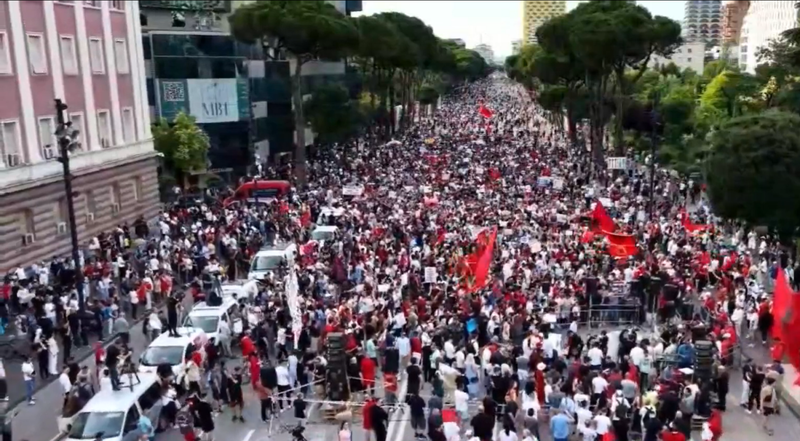
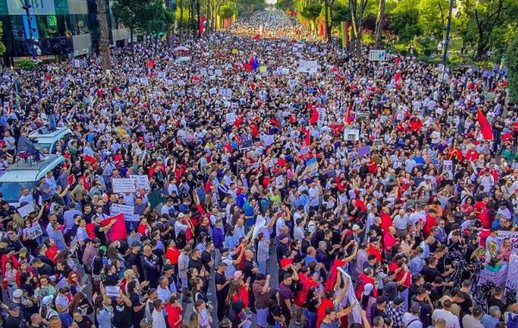
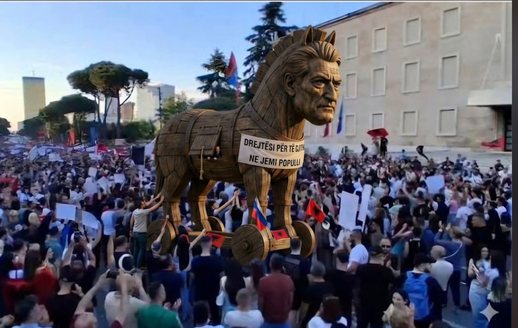
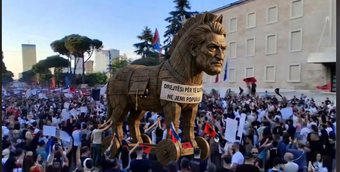
For days, thousands of citizens have been filling the streets of Albania. On the surface, the protest seems to be a reaction to a project, a government decision, a perceived injustice or an accumulated dissatisfaction. But in essence, it expresses something much bigger: the fatigue of a society with an elite that has lost the moral authority to govern.
For more than three decades, the Albanian transition has been interpreted as a process that still needs time to be completed. We have been repeatedly told that the problems of the state, corruption, lack of justice and mass emigration are common wounds of a young democracy. But after thirty-five years, it is becoming increasingly difficult to believe that the problem is still time. The problem is the elite.
The great political philosophers have never measured the quality of a system by the number of elections or the formal existence of institutions. Plato warned that the crucial question is not who governs, but with what moral character they govern. If power is not guided by virtue, democracy may retain its forms but lose its substance.
This is the drama of today's Albania.
Albanians have voted, changed governments, built institutions, adopted constitutions and reforms. But what they have failed to build is an elite that considers power as a moral responsibility and not as private property. Instead of power being seen as a burden on society, it was treated as a privilege. Instead of producing an example, it produced arrogance. Instead of cultivating merit, it rewarded loyalty.
That's why today's protests are not just against a particular decision. They are an expression of a much deeper distrust. People are no longer just asking whether a project is right or wrong. They are asking whether there is still an elite that deserves trust.
When citizens no longer trust that institutions protect them, when the law is perceived as selective, when public property is seen as an object of bargaining, and when politics is seen as a career of profit rather than public service, then the crisis is no longer administrative. It becomes a crisis of legitimacy.
This is why protests should not be treated as a public order problem. They are a symptom of a much larger problem. They are a signal that the moral contract between the elite and society is breaking down.
A wise government would understand this. It would understand that the strength of the state is not guaranteed by the police, propaganda or parliamentary majority. The strength of the state stems from trust. And trust is not produced by administrative decisions. It is earned through integrity, transparency and self-restraint.
Even the protest itself faces a historical test. It must avoid the temptation to turn into a movement against a single individual or party. Because the problem that has brought citizens to the streets is bigger than a government. It is the model of the elite that Albania has produced throughout the transition.
If the protest manages to understand this, it could become the starting point of a new political chapter. If not, it risks being absorbed into the usual cycle of rotation, where names change but the logic of power remains unchanged.
Albania is not just experiencing a political conflict. It is facing a fundamental moral question: can a republic continue to be governed by an elite that no longer convinces anyone but itself?
Because the true end of the transition will not come when new institutions are built or when new elections are held. It will only come when virtue returns as a criterion for power and when the elite understands that authority does not stem from position, but from the trust that citizens are willing to give them.
Without this change, the protest will continue to return in different forms, because the problem that fuels it is not a wrong decision. It is the moral failure of the government.
Happening now...




ideas
Protest against an immoral elite
Nga Sokol Neçaj

Protests do not produce leaders
Nga Ardi Stefa
Zombies versus Gen Z!
Nga Arbër Hitaj
top




TRENDING 



services
- POLICE129
- STREET POLICE126
- AMBULANCE112
- FIREFIGHTER128